Last reviewed: September 2026
NCAA eligibility, recruiting and scholarship rules can change by division, sport and enrollment situation. Canadian athletes should confirm current requirements with the NCAA Eligibility Center and the athletics compliance office at the colleges they are considering.
The Canadian Sports Recruiting Process: What Most Families Get Wrong
A Founder’s Perspective for Athletes in Volleyball, Hockey, Soccer, Gymnastics & Beyond
Table of Contents
The sports recruiting process
I’ve worked with Canadian athletes and families long enough to see a pattern.
Most athletes believe only talent will get them recruited.
It won’t.
The sports recruiting process is not automatic. It is not random. And it is not just about posting highlights on Instagram or YouTube.
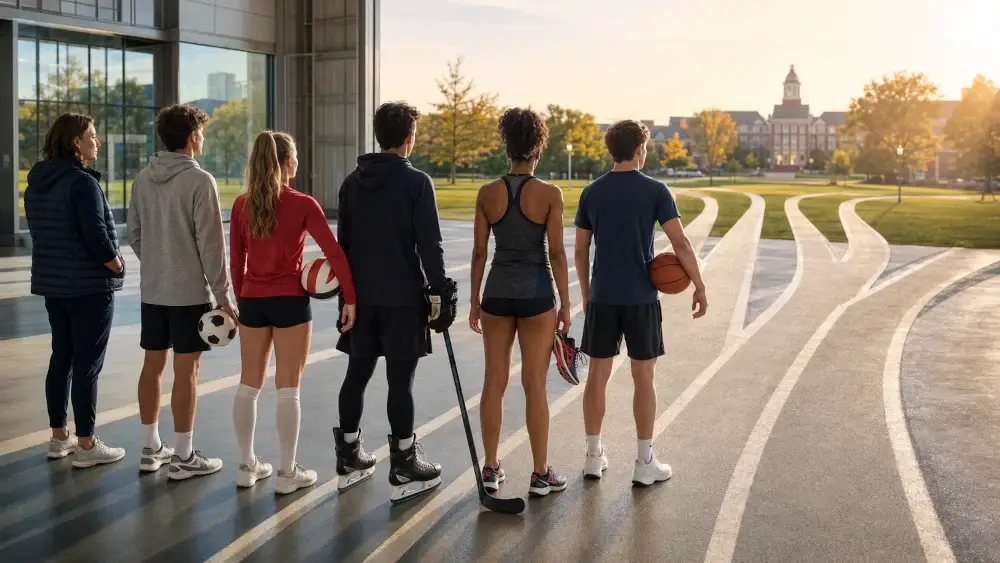
It is structured, strategic, and highly competitive — whether you’re targeting:
- U SPORTS in Canada
- NCAA (Division 1, 2, 3)
- NAIA
- JUCO
- CCAA programs
If you don’t treat recruiting like a project and a process, you will fall behind. Let me break down what actually matters. Families can take different approaches to managing this process. Compare the six sports recruiting options available to Canadian athletes.
How Canadian Athletes Get Recruited by U.S. Colleges
Getting recruited usually involves several steps working together. Athletic ability matters, but coaches also need to find you, evaluate you, determine whether you fit their program and understand whether you can meet the school’s academic requirements.
For most Canadian athletes, the process includes:
1. Understand Your College Options
Research NCAA, NAIA and junior-college opportunities and understand that the best fit may not always be the highest division.
2. Build a Coach-Ready Recruiting Profile
Put your athletic information, academics, statistics, video and coach references in one place so coaches can evaluate you quickly.
3. Identify Realistic College Programs
Build a target list based on athletic level, academics, location, school size, program needs and financial expectations.
4. Contact Coaches and Build Relationships
Recruiting rarely happens because of one email. Athletes need professional outreach, appropriate follow-up and updated information throughout the process.
5. Understand Eligibility and Admissions
Recruiting interest does not automatically mean admission or eligibility. Canadian athletes also need to manage the academic and administrative requirements associated with studying and competing in the United States.
6. Evaluate the Complete Opportunity
When interest turns into an offer, consider academics, athletic fit, playing opportunities, coaching environment, total cost and available financial aid rather than focusing only on the division name.
Families can manage these steps themselves or use different levels of recruiting support.
Your Recruiting Video Is an Evaluation Tool, Not a Movie Trailer
I’ve watched a lot of recruiting videos. Most of them are over-edited and under-informative.
College coaches do not care about:
- Music
- Slow-motion transitions
- Dramatic intro graphics
- Arrows circling the athlete
They care about decision-making, athleticism, and consistency.
What Your Video MUST Include
- A clean title screen (name, grad year, position/event, height, team, jersey number, video date)
- Clear identification
- Game context
- Strong clips first
- Under 5 minutes
If you’re a hockey player, I want to see full shifts — not just goals.
If you’re a soccer player, I want off-ball movement.
If you’re a gymnast, I want complete routines.
If you’re a volleyball player, do not open with serves. The sports recruiting process starts with clarity. Make it easy for coaches to evaluate you in under 4 minutes.
Your Email Strategy Determines Whether Coaches Open Your Video
Most athletes send weak emails.
That’s a hard truth.
Your first email needs:
- A strong subject line. Example: 2027 Canadian Centre Back – Provincial Team – Honour Roll Student
- A personalized greeting
- A clear reason why you are interested in THAT program
- Academic information (GPA matters)
- Athletic achievements
- Link to your recruiting profile page (do you have a good and complete one? – see here a volleyball example)
- Upcoming schedule
- Coach contact information
Keep it concise. Coaches scan. They do not read essays.
Follow-up emails should:
- Keep the same subject line
- Include updates only
- Add new video links
- Stay short and professional
The sports recruiting process rewards professionalism. It punishes noise.
Academics Are Not Optional
I see this mistake often.
Families focus 90% on athletics and forget that academics determine eligibility and funding.
If you are targeting NCAA:
- Register with the NCAA Eligibility Center using the account type that matches your intended division and situation
- Understand the academic requirements for your target division, including NCAA-approved core courses and core-course GPA requirements where applicable
- Keep transcripts, graduation records and athletics participation information up to date in your Eligibility Center account
If you are targeting U SPORTS:
- Review admission averages carefully
- Understand entrance scholarship thresholds
Strong academics open scholarship doors, especially in Canada, where there are no full athletic scholarships. Academic strength is leverage.
Recruiting Is Relationship Building, Not One Email
Coaches recruit people, not just athletes.
During the sports recruiting process, coaches will evaluate:
- SKILLS
- Athleticism
- Character
- Coachability
- Leadership
- Work ethic
- Social media presence
Yes, they check.
Be prepared for:
- Phone calls
- Zoom meetings
- Direct questions about adversity and goals
If you can’t articulate why you fit their program, you’re not ready.
Exposure Matters, But Strategy Matters More
Playing high-level tournaments helps.
Attending showcases helps.
But randomly attending events without a contact strategy is expensive and ineffective.
Before any event:
- Identify target programs attending
- Email them in advance
- Provide your schedule
- Follow up after the event
That’s how the sports recruiting process becomes proactive instead of reactive. Keep in mind that not all the events are worth participating.
Organization Separates Serious Athletes From Hopeful Ones
Recruiting involves dozens of moving parts, and families can lose opportunities simply because they miss a deadline or forget to follow up.
Keep one recruiting tracker with:
- Target colleges and programs
- Coach names and contact information
- Dates of emails, calls and follow-ups
- Recruiting questionnaires completed
- Video and profile updates sent
- Eligibility and academic requirements
- Application and admissions deadlines
- Offers, visits and important coach feedback
Treat recruiting like a project. Know what has been completed, what needs follow-up and what deadline comes next.
Athletic Development Still Comes First
No email strategy replaces performance.
The sports recruiting process ultimately comes down to this:
- Are you good enough?
- Are you athletic enough?
- Are you improving?
Continue to develop:
- Strength
- Speed
- Mobility
- Sport IQ
- Mental toughness
ATHLETICISM MATTERS.
Scholarships: Understand the Financial Reality
Here’s another hard truth.
Most Canadian athletes will not receive a full-ride scholarship.
Especially in Canada.
Funding often combines:
- Athletic awards
- Academic scholarships
- Entrance awards
- Needs-based aid
In the NCAA, athletics scholarship rules differ by division, sport and school. Most student-athletes who receive athletics aid do not receive a full ride, and financial packages may combine athletics aid with academic, institutional or need-based assistance. Always review the written financial aid agreement and confirm renewal terms directly with the school.
Always ask:
- Is this scholarship renewable yearly?
- What happens if the coach leaves?
- What if my role changes?
Fit over status.
Stop Obsessing Over Division 1
Some of the best athletic and academic experiences happen in:
- NCAA Division 2
- Division 3
- NAIA
- CCAA
Choose based on:
- Playing time opportunity
- Academic strength
- Coaching stability
- Team culture
- Long-term career alignment
Prestige fades. Development lasts.
Official NCAA Sources
NCAA Initial Eligibility Requirements
NCAA Scholarships & Financial Aid
Final Advice on the Canadian Sports Recruiting Process
Recruiting is not passive.
Coaches will not magically discover you.
You must:
- Communicate professionally
- Follow up strategically
- Improve continuously
- Represent yourself with maturity
- Advocate for your future
Or work with someone who understands how this system works.
Because recruiting is more than:
- A highlight video
- An Instagram page
- A profile link
The Canadian sports recruiting process is a structured pathway that rewards preparation, persistence, and clarity.
If you approach it casually, you’ll get casual results.
If you approach it strategically, doors open.
At Canadian Athletes Recruiting, together with our partner agency StudBud, we provide White-Glove Premium Recruiting Services designed to help athletes and families navigate the U.S. college recruiting process. Ask about our Money-Back Guarantee during your complimentary consultation. Eligibility and program terms apply.
Let’s talk and schedule a complimentary call with our advisors.