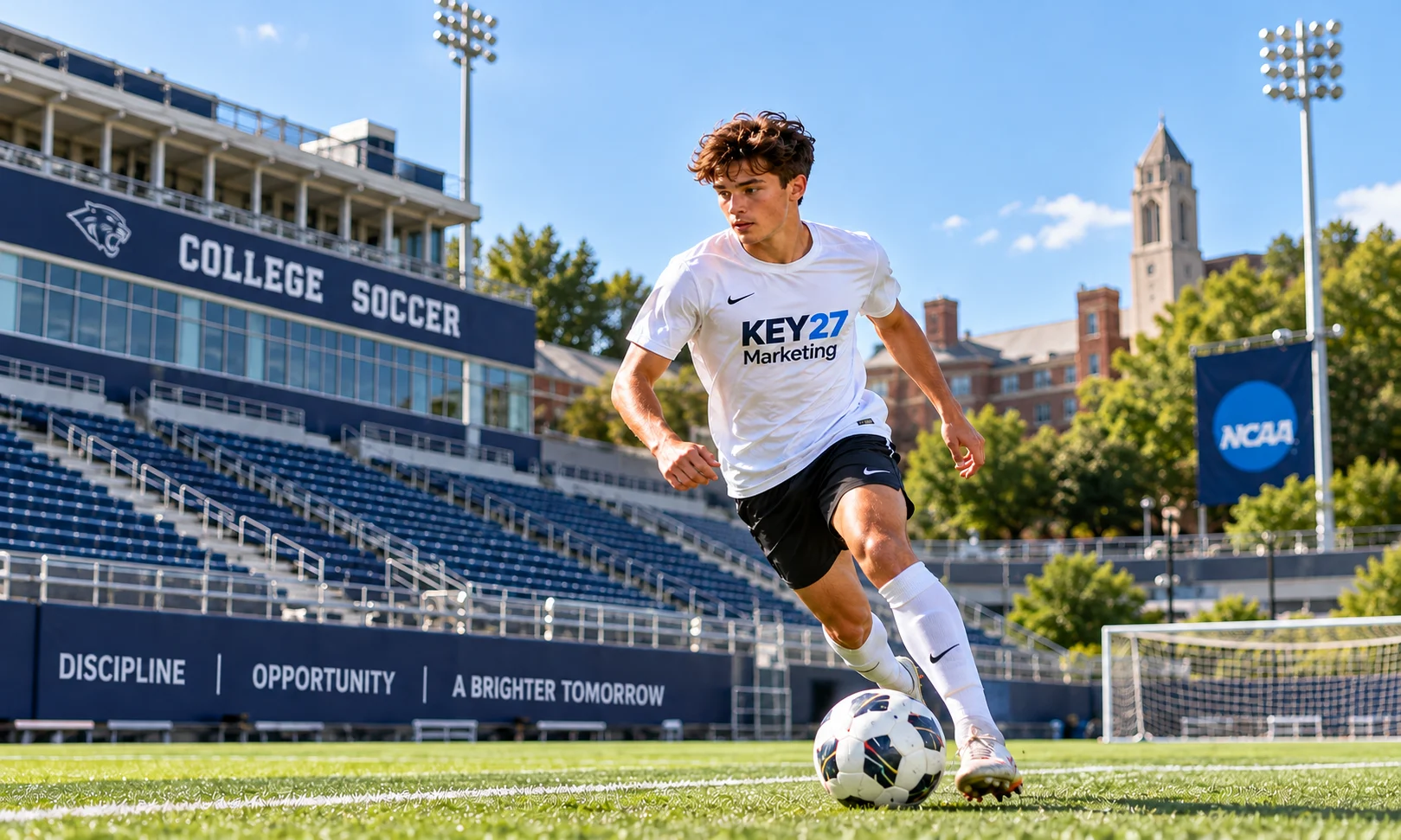
For many Canadian soccer players, competing for an NCAA Division I program is a major goal. D1 soccer offers a high level of competition, strong academic opportunities and, at many schools, the possibility of athletic and academic financial aid.
But being a talented player in Canada does not automatically put you in front of U.S. college coaches.
Getting recruited requires the right athletic level, strong academics, visibility, good timing and consistent communication with coaches.
This guide explains how Canadian players can approach NCAA Division I soccer recruiting and what you can do to give yourself the best opportunity to be evaluated by D1 programs.
Summary
If your goal is NCAA Division I soccer, focus on these key areas:
- Develop at a level that is realistic for D1 soccer.
- Keep your academics strong.
- Build a complete, current recruiting profile.
- Prepare game footage that makes you easy to evaluate.
- Research D1 programs that fit your level, position and academic goals.
- Contact coaches instead of waiting to be discovered.
- Start early enough to build relationships before roster decisions are made.
- Keep coaches updated as your soccer and academic profile develops.
- Understand that recruiting interest, admission and financial aid are related but separate parts of the process.
- Canadian players graduating in 2029 or later should also monitor the proposed TEAM USA Act, which would limit international student-athletes to 20% of each varsity roster beginning in 2029–30 if it becomes law. The proposal is not currently in effect.
Canadian players do get recruited by NCAA Division I programs, but the process is competitive. Your goal should be to make it as easy as possible for the right coaches to find you, evaluate you and understand why you may fit their program.
In This Guide
What NCAA Division I Soccer Coaches Look For
Division I coaches are not simply looking for good soccer players.
They are looking for players who can help their specific program.
That distinction matters.
A coach may already have several players in your position graduating two years from now. Another program may desperately need someone with your position, playing style or physical profile.
This is why recruiting is partly about ability and partly about fit and timing.
Athletic Level
Coaches need to see that you can compete at the speed, physical level and technical level required by their program.
Depending on your position, they may evaluate areas such as:
- technical ability
- decision-making
- speed of play
- athleticism
- movement without the ball
- tactical awareness
- competitiveness
- consistency
- position-specific skills
A striker might be evaluated partly on movement, finishing and creating scoring opportunities. A centre-back may be evaluated on positioning, aerial ability, distribution and defending. A goalkeeper needs completely different footage and information.
This is why your recruiting video should show more than your best goals.
Competition Level
Where and against whom you play helps coaches put your performance into context.
Include your:
- club or academy
- league
- tournaments
- showcases
- provincial or national-team experience, if applicable
- major competitions
You do not need to be a Canadian national-team player to get recruited.
But coaches need enough information to understand the level at which you currently compete.
Academics
Academics are part of Division I recruiting.
NCAA Division I-bound students need to complete the NCAA eligibility process. Current NCAA requirements include 16 approved core-course credits and a minimum 2.3 core-course GPA, although international academic records, including Canadian credentials, can involve specific eligibility procedures.
Good grades can also make you attractive to a wider range of universities and may open additional academic financial-aid opportunities.
Do not wait until your final year of high school to think about academics.
Character and Communication
College coaches are also evaluating the person they may be bringing into their program.
They notice:
- how you communicate
- whether you respond professionally
- whether you follow instructions
- how you interact with coaches and teammates
- whether you appear genuinely interested in their program
- whether your current coaches recommend you
Your soccer ability may open the conversation. Your overall fit can help determine whether it continues.
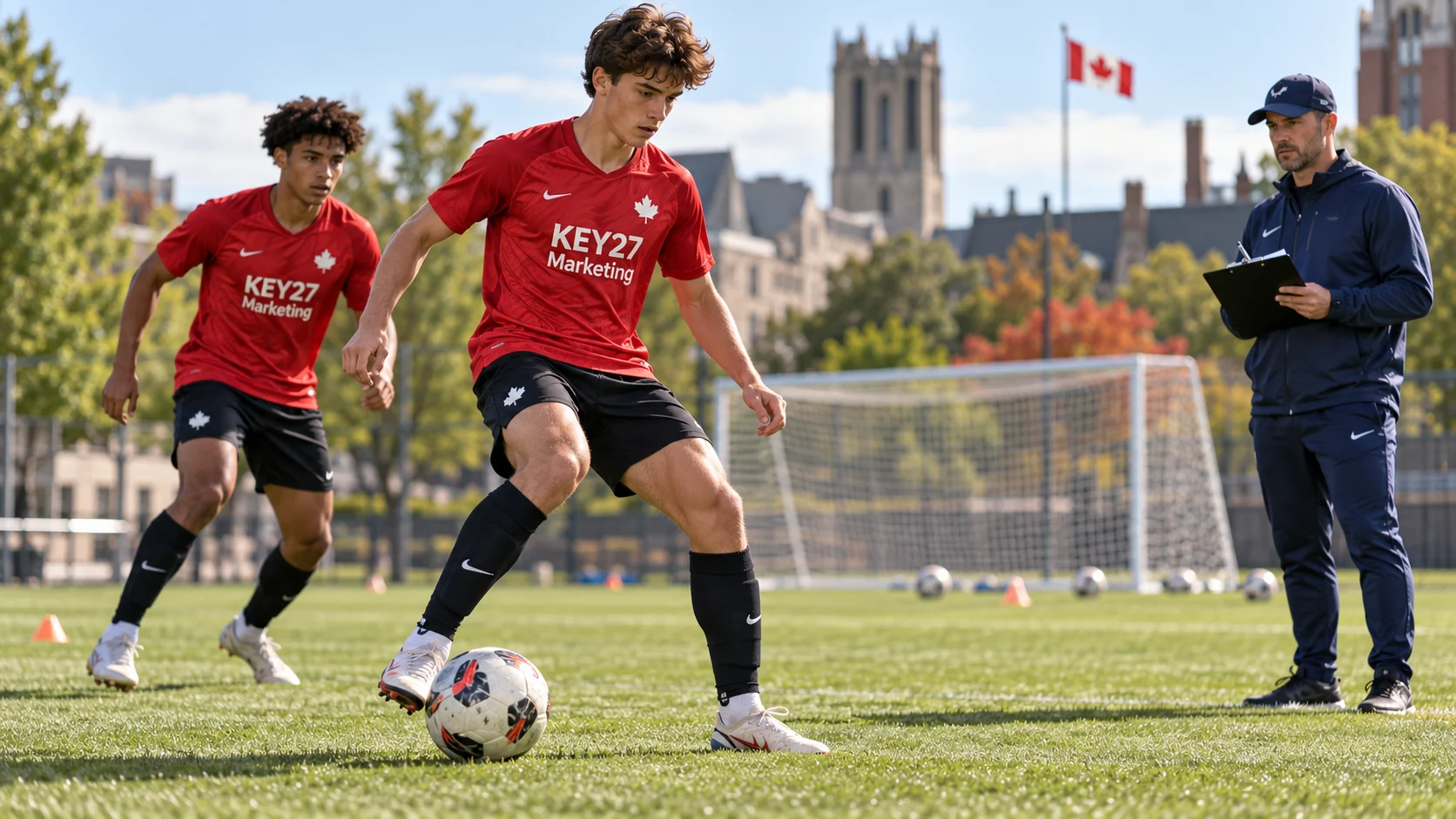
How Competitive Is D1 Soccer Recruiting?
NCAA Division I is highly competitive.
Many coaches recruit from across the United States and internationally, so a Canadian player may be competing for a roster position against athletes from many countries.
There is another important change families should understand.
Following the House settlement changes that took effect in 2025, Division I schools participating in the settlement model no longer operate under the previous sport-specific scholarship limits. Those schools may provide scholarships to athletes on their declared roster, while the current roster limit for both men’s and women’s Division I soccer is 28 players.
A Proposed International Athlete Limit Could Affect Future Recruiting
Canadian players planning to enter college in 2029 or later should also be aware of a proposed U.S. law that could affect future roster availability.
The TEAM USA Act, introduced in September 2026, would require colleges participating in federal Title IV student-aid programs to limit international student-athletes to 20% of each varsity team’s roster, beginning with the 2029–30 academic year.
For a Division I soccer program operating with the current 28-player roster limit, a 20% cap could significantly affect how many international players a program could carry if the proposal eventually becomes law.
However, the 20% limit is not current law. As of September 18, 2026, the legislation has been introduced and referred for congressional consideration. Canadian players should continue recruiting under the rules currently in effect while monitoring the proposal.
That does not mean every D1 soccer player receives a full scholarship.
The amount of athletic aid available still depends on the university, athletic department, team budget, athlete and other financial-aid considerations.
For a recruit, the practical lesson is simple:
Do not judge an opportunity only by the words “Division I” or “scholarship.”
Look at:
- whether the coach genuinely sees you as a roster fit
- your likely role
- academic fit
- total cost
- athletic aid
- academic aid
- other financial assistance
- coaching environment
- development opportunities
You should also understand the wider NCAA sports recruiting process for Canadian athletes rather than treating a D1 offer as the only definition of recruiting success.
When Should Canadian Soccer Players Start the Recruiting Process?
Do not interpret “start recruiting” as “start sending hundreds of emails.”
Your early recruiting years should be used to prepare.
Before serious coach outreach begins, you can:
- research programs
- understand the different college levels
- improve your academics
- collect match footage
- build your recruiting profile
- speak with your club coaches about your level
- identify realistic college targets
Under current NCAA Division I general recruiting rules, coaches may generally begin telephone calls and recruiting correspondence, including electronic communication, on June 15 after a prospect’s sophomore year of high school. General off-campus recruiting contact can begin August 1 at the start of the junior year. Recruiting rules can change, so families should always verify current NCAA rules when planning outreach and visits.
You should not wait for those dates to begin preparing.
A player who reaches an important recruiting period with updated video, academic information, a target-school list and a complete profile is in a much better position than a player who starts building everything after coaches are already recruiting their class.
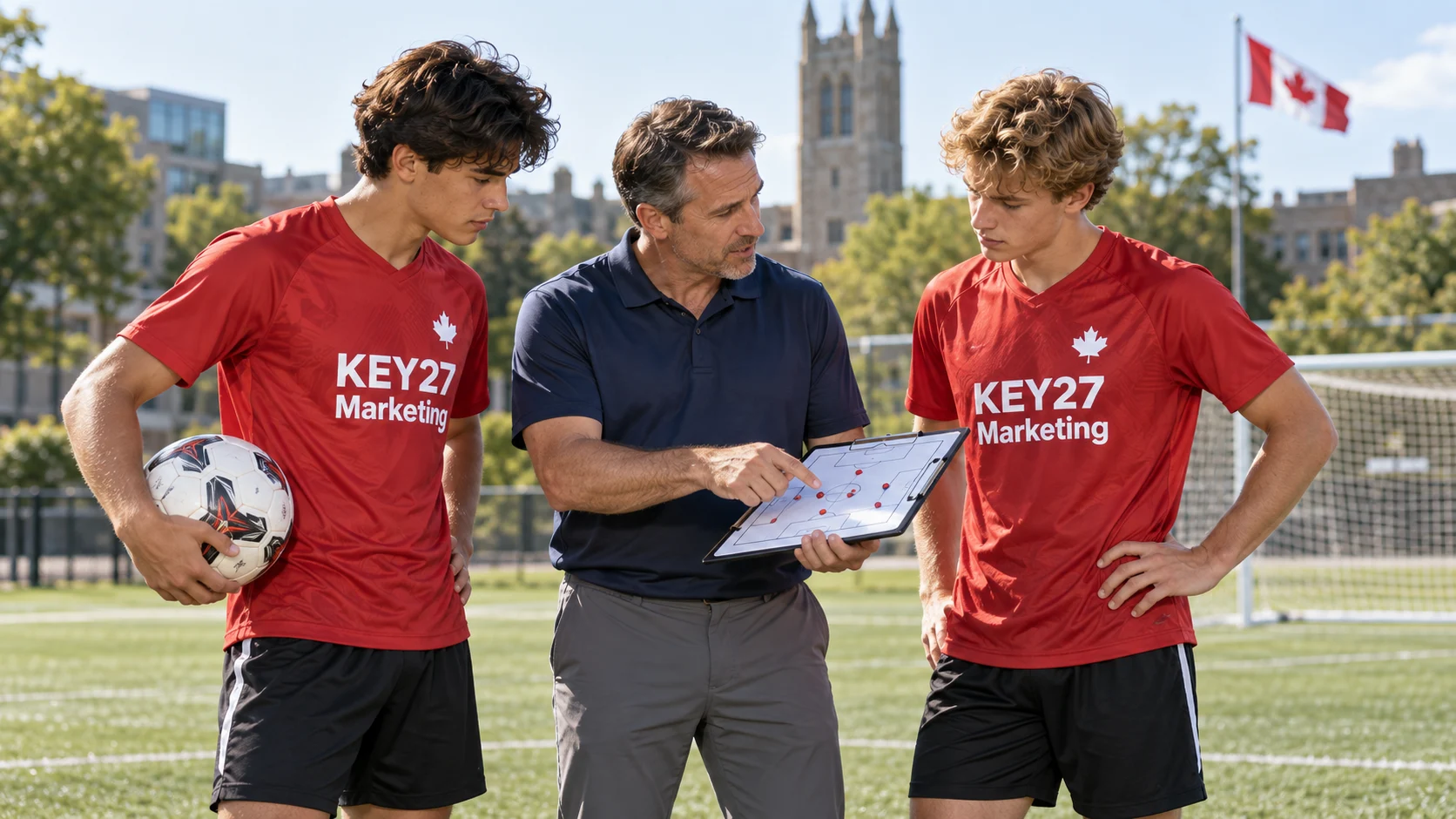
How to Build a D1 Soccer Recruiting Profile
A recruiting profile should answer the basic questions a college coach has about you within a few minutes.
At minimum, include:
Basic Information
- name
- graduation year
- location
- height
- position
- secondary position
- dominant foot
Soccer Information
Include your:
- current club or academy
- league
- playing history
- relevant statistics
- tournament history
- awards
- provincial or national experience, if applicable
- current coach contact information
Academic Information
Include current academic information such as:
- school
- graduation year
- academic results
- relevant test information, where applicable
- academic honours
Video
Your footage should help a coach evaluate you.
Start with some of your strongest relevant actions, but do not make the entire video a collection of flashy moments.
Show situations that matter for your position.
For example, a midfielder could include:
- receiving under pressure
- scanning and decision-making
- progressive passing
- defensive transition
- movement into space
- ball recovery
A goalkeeper may need:
- shot stopping
- crosses
- one-on-one situations
- distribution
- positioning
- communication situations
Full-game footage may also become important when a coach wants a deeper evaluation.
Canadian athletes who are managing their recruiting independently can create a free athlete recruiting profile and keep their soccer, academic and video information in one place.
Most importantly, keep your profile updated.
Your Grade 10 video should not still be the first thing a coach sees midway through Grade 12.
How to Create a Realistic List of D1 Programs
One of the biggest mistakes athletes make is building a target list based almost entirely on university names.
A famous school is not automatically the right soccer opportunity.
Research each program individually.
Look at the Current Roster
Ask:
- How many players are in my position?
- What graduation years are they?
- How many international players are on the roster?
- Does the program recruit players from Canada?
- What level did current players compete at before college?
You are looking for clues about what that coach normally recruits.
Watch the Team Play
Do not rely only on rankings.
Watch matches and ask yourself:
Could I realistically compete at this speed and level?
Better yet, ask an experienced coach who understands U.S. college soccer to evaluate the difference objectively.
Consider Academic Fit
You still need to be admitted to the university and succeed academically once you arrive.
A strong soccer opportunity at a school that does not fit your academic goals may not be the right opportunity.
Build Different Target Groups
Instead of contacting only dream programs, create a broader list.
For example:
- ambitious D1 targets
- realistic D1 targets
- strong-fit programs
- alternative NCAA, NAIA or junior-college options
A recruiting strategy should create options, not depend on one coach saying yes.
If you are still deciding how much of the process you want to manage yourself, compare the sports recruiting options available to Canadian athletes.
How to Contact D1 Soccer Coaches
Do not assume a coach will find you simply because you play on a strong team.
Recruiting requires visibility.
A good first coach email should be short and useful.
Include:
- your name
- graduation year
- position
- current club
- location in Canada
- why you are interested in that specific program
- a link to your recruiting profile
- a direct link to relevant video
- your upcoming competition schedule when appropriate
Avoid sending the exact same generic message to every university.
Instead of:
I am interested in playing NCAA soccer. Please watch my video.
Show that you researched the program.
Mention something specific about:
- the university
- academic program
- team
- style of play
- coach
- location
Then make it easy for the coach to evaluate you.
Follow Up Professionally
No response does not always mean no interest.
Coaches receive many messages and may be:
- travelling
- coaching
- evaluating another recruiting class
- unable to communicate yet because of NCAA rules
- waiting for more information
Follow up when you have something useful to add, such as:
- new video
- tournament schedule
- academic update
- new statistics
- significant soccer achievement
Avoid emailing repeatedly without giving the coach new information.
What Happens When a D1 Coach Is Interested?
Coach interest can develop gradually.
A response to your email is positive, but it is not an offer.
The next steps might include:
- requests for more video
- additional academic information
- phone or video conversations
- discussions with your current coach
- campus visits
- live evaluation
- conversations about roster needs
- admissions discussions
- financial-aid discussions
This is where athletes need to ask questions too.
You should understand:
- How does the coach see you fitting into the team?
- Which position are they recruiting you for?
- How many athletes are they recruiting in your class?
- What are the academic expectations?
- What does the overall financial package look like?
- What happens if the coaching staff changes?
- What development opportunities are available?
- When does the coach expect a decision?
Recruiting should be a two-way evaluation.
The coach is deciding whether you fit the program.
You and your family should be deciding whether the program fits you.
If your family wants hands-on support with college research, coach outreach, applications and offer guidance, you can also explore full NCAA college recruiting support for Canadian athletes.
Frequently Asked Questions
Can Canadian soccer players get NCAA Division I scholarships?
Yes. Canadian players can receive athletic aid from NCAA Division I programs when it is offered by the school and team. Under the current settlement model, participating D1 schools may provide scholarships to athletes on their declared roster rather than operating under the previous sport-specific scholarship caps. The actual amount of aid varies by school, program and athlete.
Do I need to play for Team Canada to get recruited for D1 soccer?
No. National-team experience can strengthen a recruiting profile, but it is not a requirement for NCAA Division I recruiting. Coaches evaluate your athletic ability, competition level, video, academics, position, development potential and fit with their roster.
When can NCAA Division I soccer coaches contact me?
Under the current general Division I rules, recruiting correspondence and telephone calls can generally begin June 15 after your sophomore year of high school, while off-campus contact generally begins August 1 at the start of your junior year. Rules can change, so always verify current NCAA requirements.
Is a highlight video enough to get recruited?
Usually not by itself. Video can help a coach decide whether to continue evaluating you, but recruiting may also include full-game footage, live evaluation, academic review, coach references, conversations and assessment of how you fit the team’s roster needs.
Should I only contact NCAA Division I soccer programs?
Not necessarily. If your goal is to play college soccer in the United States, Division I is only one pathway. NCAA Division II, Division III, NAIA and junior-college programs can also provide strong soccer and academic opportunities. Your target list should reflect your athletic level, academic goals, finances and preferred college experience.
If you are still exploring the wider U.S. soccer pathway, see our complete guide to U.S. college soccer recruiting for Canadian athletes.